
A dental implant is not one cost. It is a chain of costs, and the clinics that quote you the lowest single figure are often the ones that add the rest back later.
This guide does the opposite. It walks you through the entire real cost of an implant in Ghana in 2026, the parts that get left out of the headline price, who is actually a good candidate, and how to tell a fair quote from a bait price.
If you read it before you book a consultation anywhere, you will walk in knowing more than most patients ever do.
What a Single Dental Implant Actually Costs in Ghana in 2026
A realistic all-in range for a single tooth implant at a reputable Accra clinic in 2026 — post, abutment, and crown included — sits between GHS 8,500 and GHS 18,000.
The wide range is not arbitrary. It reflects the implant brand, the crown material, and whether your case needs preparatory work. Here is the honest breakdown of what sits inside that number:
| Component | What it is | Typical cost (GHS) |
|---|---|---|
| Consultation + imaging | Examination, X-ray or CT scan to assess bone | 300 – 1,200 |
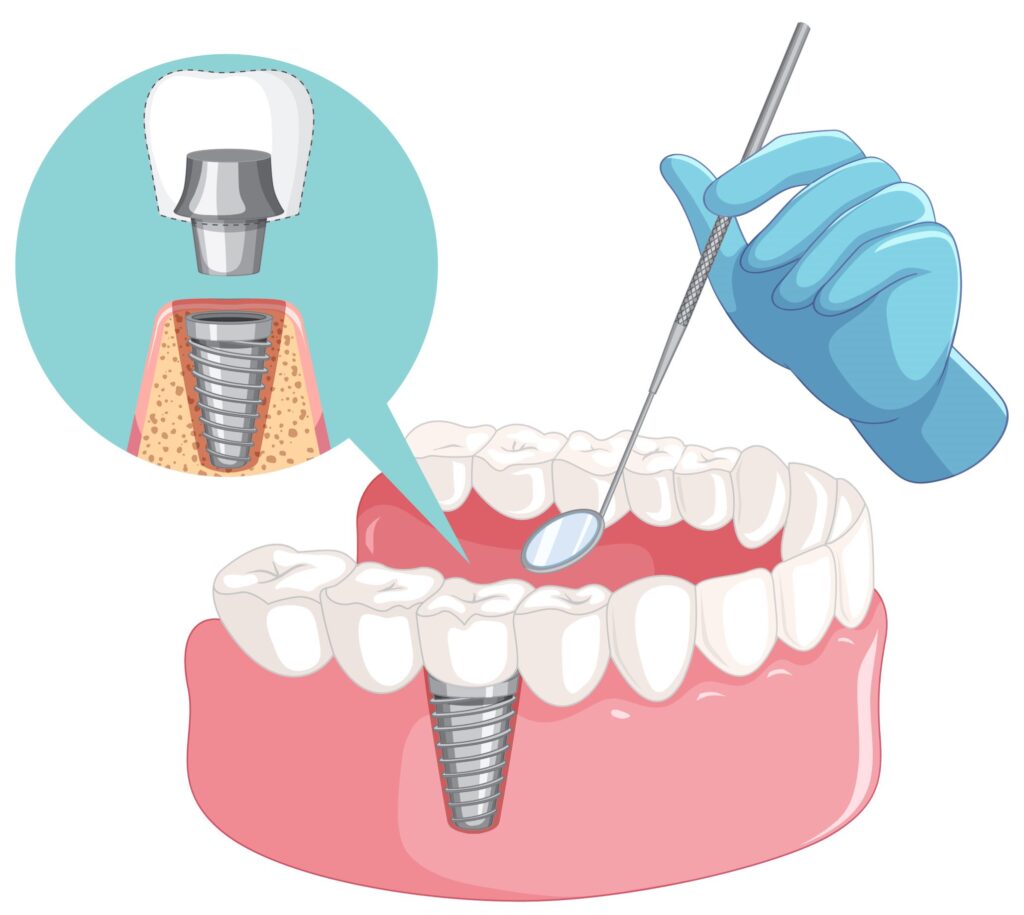
| The implant post | Titanium screw placed in the jaw | 3,500 – 8,000 |
| Abutment | Connector between post and crown | 1,000 – 2,500 |
| Crown | The visible tooth (porcelain or zirconia) | 2,500 – 5,500 |
| Extraction (if needed) | Removing the failing tooth first | 300 – 1,500 |
| Bone graft (if needed) | Building up bone before placement | 2,500 – 6,000 |
| Follow-up visits | Healing checks over 3–6 months | Often included — confirm |
| The hidden-total trap: When a clinic advertises an implant “from GHS 6,000,” that figure is almost always the post alone. The abutment, crown, imaging, and any extraction or grafting are extras. By the time the tooth is actually in your mouth and working, the real total is frequently double the advertised price. Before you commit anywhere, ask one question: “Is this quote the full cost of a finished, working tooth, or just one part of it?” The answer separates honest clinics from bait pricing. |
Who Is Actually a Good Candidate for Implants?
Competitor pages talk endlessly about why implants are great but almost never tell you who should not get one, which is exactly what an honest assessment requires.
Implants need a foundation. If the foundation is not there, the implant fails, and you would have paid for something that did not work.
You are likely a good candidate if:
- You have adequate jawbone density to anchor the implant (this is checked with imaging, not guessed).
- Your gums are healthy and free of active disease.
- You are a non-smoker, or willing to stop during the healing period — smoking is one of the leading causes of implant failure.
- You are committed to oral hygiene. Implants do not get cavities, but they get peri-implantitis, a gum-disease-like infection that destroys the bone holding the implant.
You may need extra steps or a different solution if:
- You have lost significant bone where the tooth used to be. You will likely need a bone graft first, adding cost and several months.
- You have uncontrolled diabetes, which slows healing and raises failure risk. Implants can still work, but your diabetes must be well-managed first.
- You have active gum disease; this must be treated before any implant is placed.
- You are on certain bone medications (bisphosphonates); tell your dentist; this changes the plan.
A clinic that books you for implant placement without imaging your bone and reviewing your medical history is not assessing you. It is selling you. Walk away.
How Painful Is Getting a Dental Implant?
This is one of the most common things people quietly worry about and rarely get a straight answer on. Here is the straight answer.
The placement itself is done under local anaesthesia. You should feel pressure and some vibration, but no pain during the procedure. Most patients are genuinely surprised by how undramatic it is — many describe it as easier than the extraction that preceded it.
Once the anaesthesia wears off after the procedure, expect soreness for two to five days, manageable with ordinary over-the-counter painkillers like paracetamol or ibuprofen.
Afterwards, you should be able to get back to work within a short period. In fact, most people with desk jobs are back at work within one to two days.
Sharp, increasing, or throbbing pain that gets worse after the first few days is not normal and is a reason to call your dentist promptly — it can be an early sign of infection. Normal healing gets better day by day, not worse.
How Long Do Dental Implants Last?
With good oral hygiene and regular dental visits, the titanium post itself can last decades — often a lifetime. The crown on top is the part that wears; it typically needs replacing after 15 to 25 years.
This is why implants are usually described as the most cost-effective tooth replacement over a lifetime: a bridge often needs replacing every 10 to 15 years, while a well-maintained implant post is a one-time investment.
But “can last a lifetime” comes with a condition that competitor pages gloss over: it depends entirely on you. Implants fail when oral hygiene slips and peri-implantitis sets in.
The implant cannot decay, but the bone holding it can be destroyed by infection just like a natural tooth. If you are not willing to brush, floss around the implant, and attend check-ups, the lifetime promise does not apply to you.
Implants vs Bridges vs Dentures: The Honest Comparison
Implants are not automatically the right answer. The right answer depends on your case, your budget, and how many teeth are missing. Here is how the three options actually compare for a Ghanaian patient in 2026:
| Factor | Implant | Bridge | Denture |
|---|---|---|---|
| Upfront cost (per tooth) | GHS 8,500–18,000 | GHS 4,500–9,000 | From GHS 1,500 |
| Lifespan | 20+ years / lifetime | 10–15 years | 5–8 years |
| Protects jawbone? | Yes | No | No |
| Affects neighbouring teeth? | No | Yes — they are filed down | No |
| Feels like a real tooth? | Yes | Mostly | No — removable |
| Best when | 1–few teeth, good bone | Budget, teeth on both sides | Many teeth, lowest budget |
If budget is the deciding factor and the gap has healthy teeth on either side, a bridge can be a sound choice. If you have several missing teeth but limited funds, a partial denture restores function affordably.
Implants win on longevity and on protecting the jawbone, but they ask for more upfront. A clinic that only ever recommends implants, regardless of your case, is not advising you — it is upselling.
Can You Get Dental Implants at a Government Hospital in Ghana?
Some teaching and regional hospitals in Ghana have dental departments that offer implant services, and they can be more affordable than private clinics.
The trade-offs are real, though: waiting lists are longer, you may not see the same clinician each visit, and the multi-month implant timeline becomes harder to manage when appointment availability is tight.
Most patients who can afford private care choose it for the continuity and scheduling, not because government facilities lack skill.
Does NHIS or Health Insurance Cover Dental Implants in Ghana?
Generally, no. Dental implants are classified as restorative or elective procedures, and neither the National Health Insurance Scheme nor most private health insurance policies in Ghana cover them.
NHIS covers limited basic dental care — certain extractions and emergency treatments — but not implants, crowns, or cosmetic work. If you have private health insurance, check your specific policy wording before assuming, but budget as though you are paying out of pocket, because most patients are.
How to Spot a Bait Price (and an Implant-Tourism Trap)
Ghana’s implant market has its share of pricing that looks too good to be true, and usually is. A few warning signs worth knowing before you put down a deposit:
- A single dollar or cedi figure with no breakdown. Real implants have components; a one-number quote is hiding something.
- No imaging before quoting. Nobody can responsibly price an implant without seeing your bone first.
- Pressure to pay a large deposit immediately to “lock in” a promotional price.
- No mention of the brand of implant being used. Unbranded or unknown implants are cheaper for a reason; if one fails, replacement parts may be impossible to source.
- Vague answers about what happens if the implant fails. A reputable clinic has a clear position on this.
The cheapest implant is not the one with the lowest sticker. It is the one that succeeds the first time and lasts. A failed cheap implant costs more than a sound expensive one because you pay twice and lose months of healing in between.
What to Expect, Start to Finish
- Consultation and imaging to assess your bone and plan the placement.
- Any preparatory work; extraction of a failing tooth or a bone graft if needed (graft healing adds several months).
- Placement of the titanium post under local anaesthetic.
- Healing period of three to six months while the bone fuses to the implant (this stage cannot be rushed).
- Placement of the abutment and the final crown.
- Ongoing maintenance: the same brushing, flossing, and check-ups you would give a natural tooth.
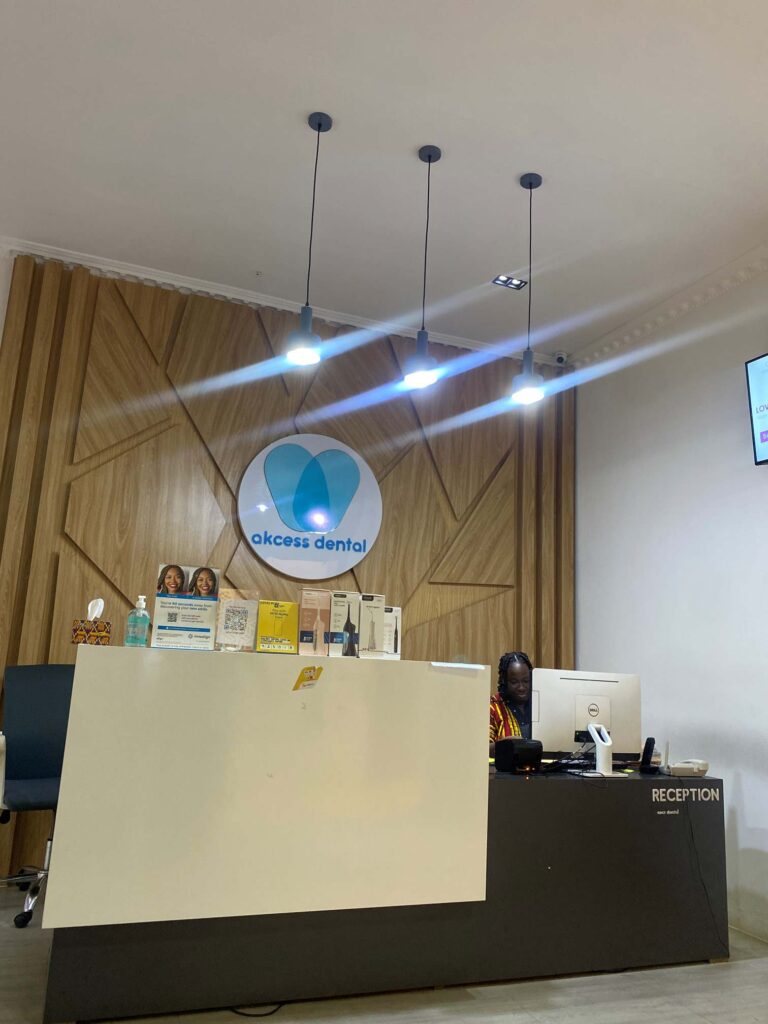
Talk to Akcess Dental About Your Case
Every implant case is genuinely different, which is why an honest clinic gives you a real quote only after seeing your mouth, not before.
At Akcess Dental, an implant consultation includes:
- imaging
- a review of your medical history
- an honest conversation about whether an implant, a bridge, or a denture is the better choice for your case
- An itemised, cedi-denominated quote for the full finished tooth, not just one component of it.
If implants turn out not to be right for you, we will tell you, and we will tell you what is. Book a consultation at North Legon, Oyarifa, or Ho-Bankoe through our contact page.
Frequently Asked Questions
How much does a single dental implant cost in Ghana in 2026?
A single tooth implant at a reputable Accra clinic typically costs between GHS 8,500 and GHS 18,000 in 2026, including the post, abutment, and crown. Advertised prices “from GHS 6,000” usually refer to the post alone, with the crown and other components charged separately.
Are dental implants worth it in Ghana?
For patients with good bone density and healthy gums who are missing one or a few teeth, implants are usually worth the higher upfront cost because they last far longer than bridges or dentures and protect the jawbone. For patients on a tight budget or with significant bone loss, a bridge or denture may be the more sensible choice. The right answer depends on your individual case.
How long does the whole implant process take?
From placement to final crown, the process typically takes three to six months because the jawbone needs time to fuse with the implant. If a bone graft is required first, add several more months. The placement procedure itself is a single visit.
Can my body reject a dental implant?
True rejection is extremely rare because titanium is biocompatible. What people call “rejection” is usually implant failure caused by infection (peri-implantitis), insufficient bone, smoking, or uncontrolled diabetes — not the body attacking the implant. Good candidate selection and good aftercare prevent the vast majority of failures.
Is a dental implant painful?
The placement is done under local anaesthesia and is not painful during the procedure. Afterwards, expect mild to moderate soreness for two to five days, manageable with over-the-counter painkillers. Most patients return to normal activities within one to two days.
What is the cheapest way to replace a missing tooth in Ghana?
A removable partial denture is the most affordable option, starting from around GHS 1,500. A bridge is mid-range. An implant is the most expensive upfront but the longest-lasting. Cheapest upfront is not the same as cheapest over time — dentures and bridges need replacing periodically, while implants can last decades.
Do dental implants set off metal detectors?
No. The titanium used in dental implants is non-magnetic and the amount is far too small to trigger airport security or other metal detectors. You do not need any documentation to travel with implants.