
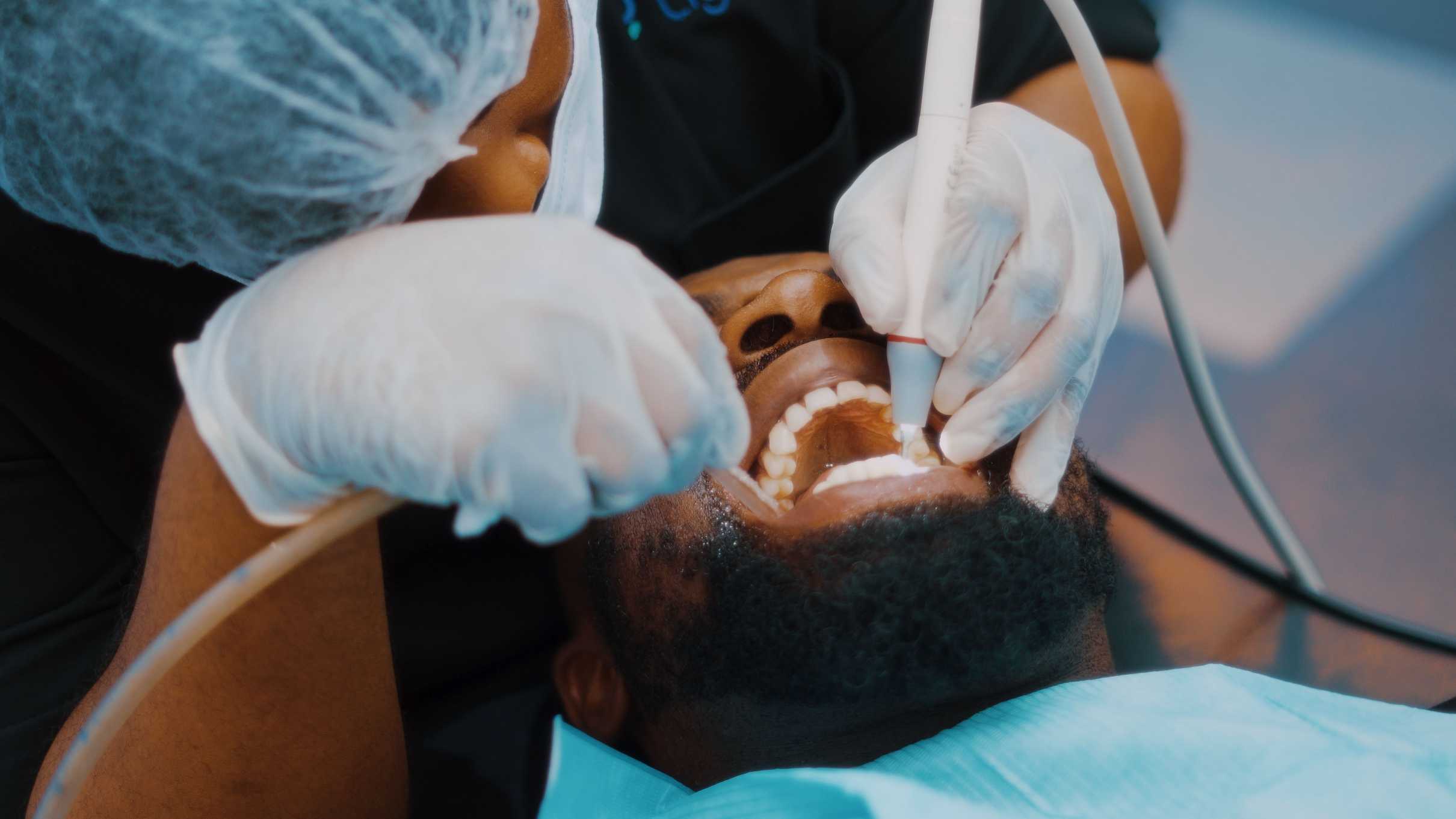

You’ve just been told you have a cavity. The dentist says you need a filling. And your immediate questions are probably:
How much is this going to cost? Will it hurt? How long will it last? And should I go with the silver one or the white one?
This guide walks you through exactly what happens during a filling procedure, breaks down the real cost differences between filling types in GHS, and explains how long each type lasts so you can make an informed decision.
What Is a Dental Filling, and Why Do You Need One?
A dental filling is a restorative treatment that repairs a tooth damaged by decay (a cavity).
The dentist removes the decayed portion of the tooth, cleans the area, and fills the resulting space with a durable material that restores the tooth’s shape and function.

Without a filling, a cavity doesn’t just stay the same size. It grows. Decay spreads through the tooth enamel into the softer dentine layer beneath, and eventually reaches the nerve (pulp).
At that point, you’re looking at a root canal or extraction, both of which are significantly more expensive, more invasive, and more painful than a simple filling.
What Happens During a Filling? Step by Step
If you’ve never had a filling before, here’s exactly what to expect at a modern dental clinic like Akcess Dental. The entire procedure typically takes 20 to 45 minutes.
Step 1: Numbing. Your dentist applies a topical anaesthetic gel to the gum near the affected tooth. After a minute or two, a local anaesthetic injection numbs the area completely. You’ll feel a brief pinch, then nothing. The tooth and surrounding area will be numb for 1–3 hours after the procedure.
Step 2: Removing the decay. Using a dental handpiece (the “drill”), your dentist removes all decayed material from the tooth. You’ll hear the sound and feel vibration, but you should not feel pain. If you do, tell your dentist immediately; more anaesthetic can be added.
Step 3: Shaping and cleaning. The cavity is shaped to hold the filling material securely. The area is then cleaned to remove bacteria and debris before the filling is placed.
Step 4: Placing the filling. The filling material is applied in layers. For composite (white) fillings, each layer is hardened with a special blue light. For amalgam (silver) fillings, the material is packed into the cavity and shaped.
Step 5: Bite check and polish. You’ll bite down on articulating paper to check that the filling doesn’t sit too high. Your dentist adjusts and polishes the filling until your bite feels natural. That’s it — you’re done.
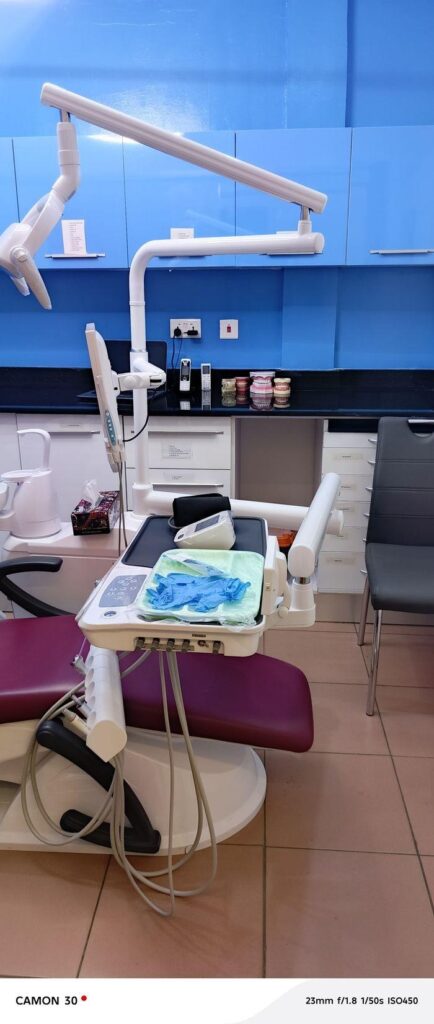
Treatment room at Akcess Dental, equipped with digital imaging and modern restorative instruments for precise filling placement.
Composite vs Amalgam Fillings: Which Should You Choose in Ghana?
This is the decision most Ghanaian patients face. Here’s an honest comparison based on how each material actually performs:
| Factor | Composite (White) Filling | Amalgam (Silver) Filling |
| Appearance | Tooth-coloured. Matched to your natural shade. Virtually invisible. | Silver-grey. Highly visible, especially on the front or visible teeth. |
| Durability | 5–10 years with proper care. Newer composites are significantly stronger than earlier versions. | 10–15+ years. Amalgam is extremely durable and handles heavy chewing forces well. |
| Best for | Front teeth, visible teeth, small to medium cavities. Patients who want a natural look. | Back teeth (molars) with large cavities. Patients prioritising longevity over appearance. |
| Tooth preservation | Bonds to tooth structure. The less healthy tooth needs to be removed. | Requires more tooth removal to create a mechanical hold. |
| Mercury content | None. Made from composite resin (plastic and glass particles). | Contains approximately 50% mercury in an alloy with silver, tin, and copper. Extensively studied and declared safe by the WHO and ADA. |
| Sensitivity after placement | Mild sensitivity for 1–2 weeks is common. | Less post-operative sensitivity in most cases. |
| Cost (Accra market range) | GHS 495–1000 | GHS 495–1000 |
Should you be worried about mercury in amalgam fillings?
This comes up frequently in Ghana. The short answer: dental amalgam has been used for over 150 years and is considered safe by the World Health Organization, the American Dental Association, and the FDA.
The mercury in dental amalgam is bound within an alloy and behaves differently from liquid mercury. That said, if you prefer to avoid it entirely, composite fillings are a mercury-free alternative.
Your dentist at Akcess Dental will discuss both options with you.
Does Getting a Filling Hurt?
With modern local anaesthetics, a filling should not be painful. The injection itself involves a brief pinch that lasts 1–2 seconds. After that, you’ll feel pressure and vibration during the procedure, but not pain.

Some patients experience mild sensitivity in the filled tooth for a few days after the procedure, particularly with hot and cold food and drinks.
This is normal and typically resolves within one to two weeks. If sensitivity persists beyond that, contact your dentist — the filling may need a minor adjustment.
If you’re particularly anxious, let the team at Akcess Dental know before your appointment. Additional comfort measures — from extra numbing gel to taking breaks during the procedure — are always available.
How Long Does a Tooth Filling Last, and What Makes It Fail?
No filling lasts forever. But the lifespan varies significantly depending on the material, the size of the filling, where it is in your mouth, and how well you look after it.
| Material | Average Lifespan | Common Failure Modes |
| Composite (white) | 5–10 years | Staining, edge wear, and secondary decay underneath |
| Amalgam (silver) | 10–15+ years | Expansion/contraction causing cracks, corrosion, secondary decay |
| Glass ionomer | 3–5 years | Lower durability; typically used as a temporary or paediatric filling |
The most common reason fillings fail is secondary decay — new decay forming at the edges where the filling meets the tooth.
This happens when oral hygiene is poor, when the filling edge is not perfectly sealed, or simply over many years as the seal gradually breaks down. Regular dental check-ups catch this early, before the filling needs to be completely replaced.
How Much Does a Tooth Filling Actually Cost in Accra?
Dental filling costs in Accra vary depending on three factors:
- the material used
- the size and location of the cavity
- the clinic you visit
Private clinics typically charge more than government dental centres, but the difference reflects equipment quality, material quality, and the time spent on each patient.
At Akcess Dental, every filling includes a full examination, a radiograph if clinically indicated, and a bite check — not just the filling itself.
Can I Use NHIS for Dental Fillings in Ghana?
The National Health Insurance Scheme covers basic dental procedures, including amalgam fillings at accredited facilities.
However, composite (white) fillings are typically not covered, and NHIS tariffs for dental work are significantly lower than private clinic pricing.
If cost is a primary concern, discuss your options with your dentist. Many patients choose amalgam for back molars where appearance is less important, and composite for visible front teeth.
This mixed approach balances aesthetics with cost.
How to Make Your Filling Last Longer
1. Brush twice daily with fluoride toothpaste. Fluoride strengthens the tooth structure around the filling and helps prevent secondary decay.
2. Floss daily. The junction where the filling meets the tooth is most vulnerable. Flossing removes the plaque that brushing misses.
3. Avoid using your teeth as tools. Opening bottles, tearing packaging, or cracking nuts with filled teeth is a reliable way to chip a filling.
4. Attend six-monthly check-ups. Your dentist checks your fillings at every visit. Small problems caught early are simple fixes; small problems left alone become big ones.
Need a Filling?
Book at Akcess Dental. North Legon (Bethel Street, Accra), Oyarifa Mall (Ayi Mensah, Accra), Ho-Bankoe (Beside NIB, Ho). +233 59 192 8740, phone.
All three branches offer composite and amalgam fillings with same-week appointments available.
Related Reading
→ Tooth Extraction Recovery in Ghana: What to Eat, Avoid & Healing Guide
→ Gum Disease Treatment in Accra: The Diabetes Link Ghana Needs to Know




Please help me to fill my teeth
Dear Francis,
Thank you for reaching out to Akcess Dental!
We would be happy to help you repair and restore your teeth. The exact type of filling or treatment needed will depend on an evaluation of the tooth during a consultation.
Please call or message us directly on 0209100136 or visit our clinic to schedule an appointment with one of our dentists so we can examine your teeth and discuss the best treatment options for you.
Best regards,
Akcess Dental Team
Something about my teeth
Dear Francis,
Thank you for reaching out to Akcess Dental!
We would be happy to help you repair and restore your teeth. The exact type of filling or treatment needed will depend on an evaluation of the tooth during a consultation.
Please call or message us directly at 0209100136 or visit our clinic to schedule an appointment with one of our dentists so we can examine your teeth and discuss the best treatment options for you.
Best regards,
Akcess Dental Team