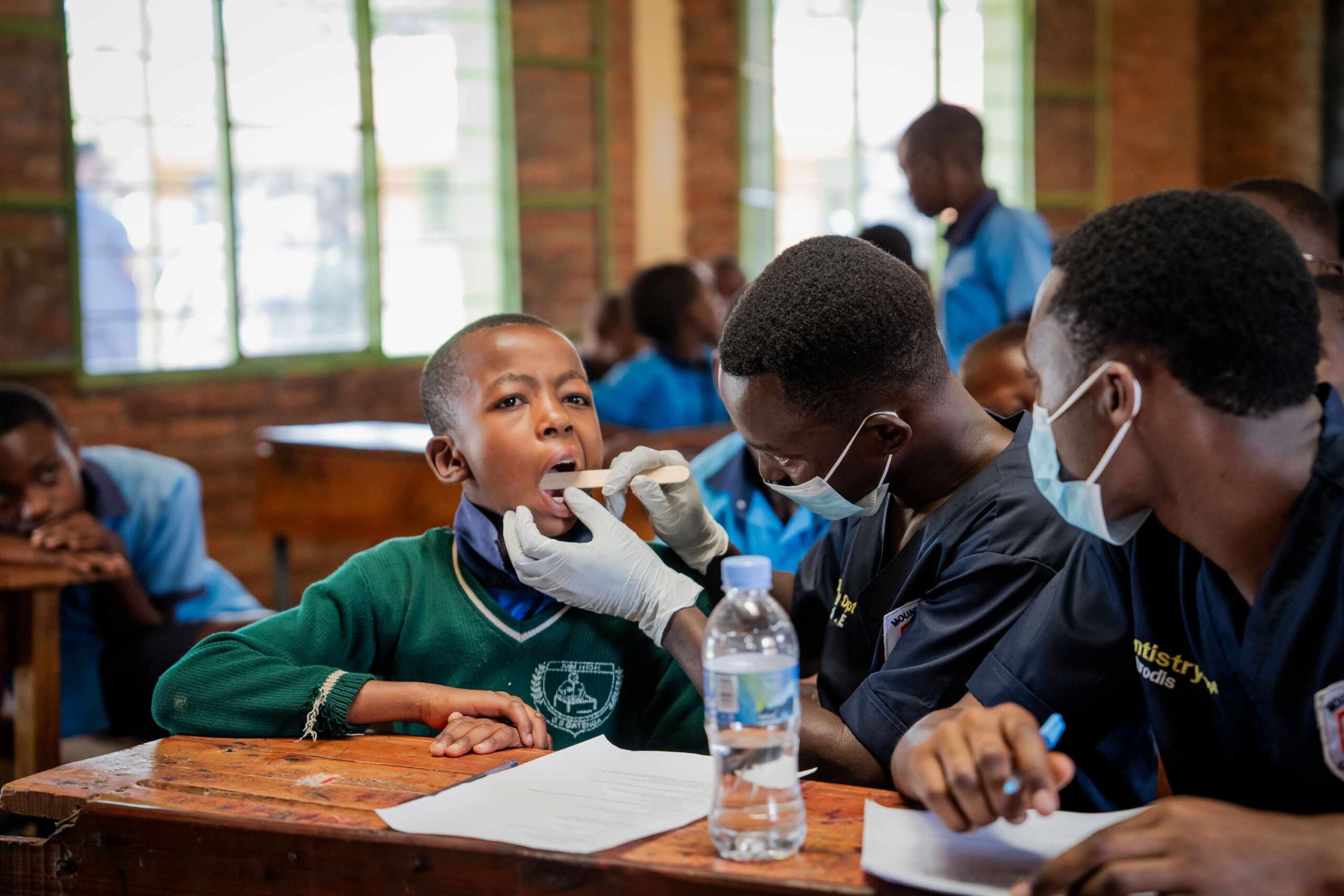

Your five-year-old cries before you even park. Your eight-year-old clenches their jaw shut the moment the dentist appears. And somewhere in the middle of it all, you’re wondering whether you’re a bad parent for either forcing them into the chair or avoiding the visit altogether.
You’re not. Dental anxiety in children is extremely common. Research shows that roughly 9% of children experience anxiety severe enough to interfere with dental care.
And in Ghana, where many children’s first dental visit happens only after a toothache has already set in, that number is likely higher.
This guide gives you practical, evidence-based strategies that actually work, not generic advice like “just be positive.” It’s written by the paediatric dentistry team at Akcess Dental, where we treat anxious children across all three branches every single day.
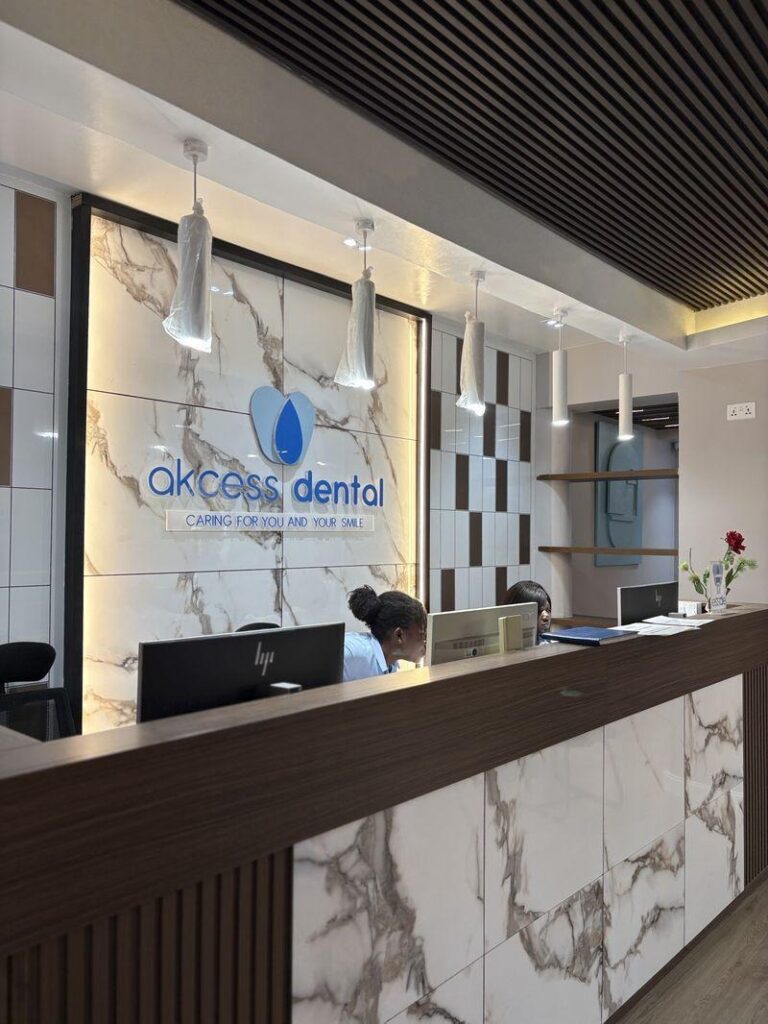
The reception at Akcess Dental, North Legon, designed to feel welcoming from the moment families walk in.
Why Is Your Child Afraid of the Dentist?
Before you can fix the fear, you need to understand what’s driving it. The specific trigger matters because the solution is different for each one.
Fear of the unknown. This is the most common trigger, especially for children visiting a dental clinic for the first time. They don’t know what the chair does, what the instruments are for, or what’s about to happen. Uncertainty feels dangerous to a child’s brain.
Fear of pain. If your child has already had a painful dental experience — or has heard stories from classmates, siblings, or even you — they’ve already formed an expectation. That expectation is often worse than reality, but it feels absolutely real to them.
Fear of loss of control. Lying back in a chair while a stranger puts instruments in your mouth is a vulnerable position for anyone. For a six-year-old who doesn’t fully understand what’s happening, it can feel overwhelming.
Learned anxiety from parents. This one is uncomfortable to hear, but it’s well-documented. Children absorb their parents’ attitudes towards the dentist. If you tense up when discussing dental visits, your child notices. If a relative tells stories about painful extractions at dinner, your child files that away.
What Not to Do (Common Mistakes Ghanaian Parents Make)
Before we get to what works, let’s clear out what doesn’t. These approaches are well-intentioned but consistently backfire.
Using the dentist as a threat
“If you don’t brush your teeth, the dentist will pull them out!” This turns the dentist into a punishment figure. Your child now associates the clinic with wrongdoing. Even if it gets them brushing tonight, it makes every future dental visit harder.
Lying about what will happen
“It won’t hurt at all” or “The dentist is just going to look.” If the visit then involves anything beyond looking — and it usually does — your child feels betrayed. Trust, once broken, is hard to rebuild. A child who’s been lied to once will assume you’re lying next time too.
Bribing with big rewards
“If you’re good at the dentist, I’ll buy you a PlayStation.” High-stakes bribes signal that the experience is something so terrible it requires major compensation. They also set an unsustainable precedent. What do you offer for visit number four?
What Actually Works: Six Evidence-Based Strategies
1. Start before there’s a problem
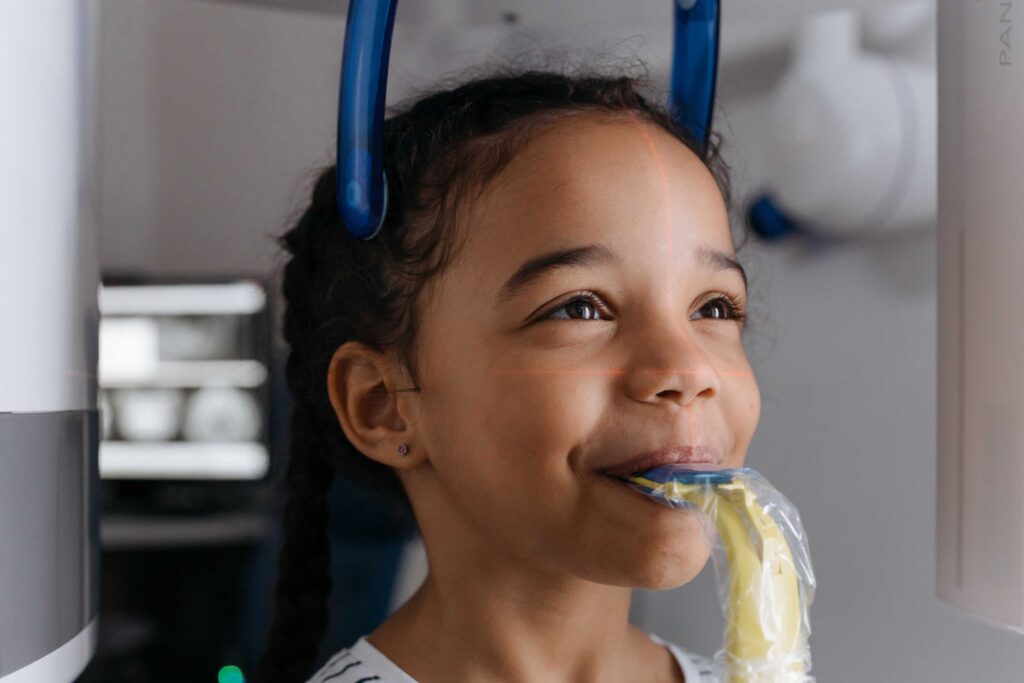
The single most effective way to prevent dental anxiety is to bring your child to the dentist before they’re in pain.
A first visit at age one or two — where nothing happens except a gentle look and a chat — creates a positive baseline. The child learns that the dental clinic is a normal, safe place.
Research has found that children who started dental visits before age two had significantly lower dental fear scores at age seven than those whose first visit was triggered by a problem. Early exposure works.
2. Use the “Tell-Show-Do” technique at home
This is one of the most widely used anxiety-management techniques in paediatric dentistry, and you can start it before the appointment. Here’s how it works:
Tell: Explain what will happen in simple, honest language. “The dentist will count your teeth with a tiny mirror. Then they’ll clean them with a special toothbrush that buzzes.”
Show: Use a toothbrush at home to “practice.” Open wide, count teeth, make buzzing sounds. You can even role-play being the patient while your child plays dentist.
Do: At the clinic, the dentist follows the same sequence. Your child already knows what’s coming, so the unknown becomes familiar.
3. Watch your own language
Words like “pain,” “needle,” “drill,” and “injection” have no place in your pre-appointment conversation. Not because you’re hiding reality — but because a child interprets these words at maximum intensity.
Instead, use neutral language: “sleepy medicine” instead of injection, “tooth counter” instead of probe, “water sprayer” instead of drill. Paediatric dentists at Akcess Dental use similar child-friendly language during treatment — it helps to be consistent.
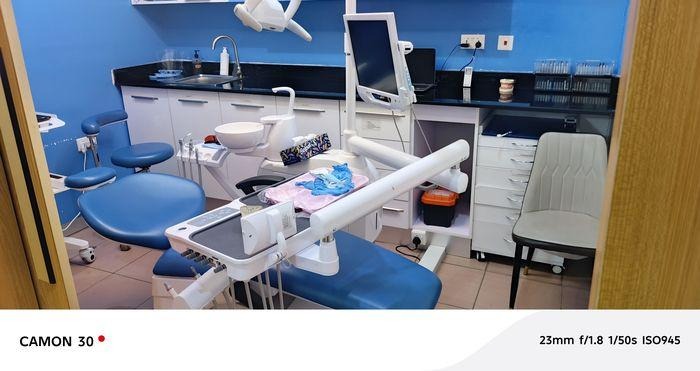
A treatment room at Akcess Dental — modern equipment in a clean, bright environment. Not the dark, intimidating space many children imagine.
4. Give your child controlled choices
Anxiety is often rooted in a feeling of powerlessness. Giving your child small, controlled choices restores their sense of agency without compromising the visit.
“Do you want to sit in the chair yourself, or would you like to sit on my lap?” “Would you like to hold the mirror yourself?” “Should we start with the top teeth or the bottom teeth?”
These choices don’t change the outcome, but they change how your child experiences it.
5. Bring a comfort object, and arrive early
A favourite stuffed animal, a blanket, or even a small toy from home can make the dental chair feel less foreign. Call the clinic ahead to confirm this is welcome (it is at Akcess Dental).
Arriving 10–15 minutes early also helps. A rushed arrival, with a parent already stressed about parking and timing, transfers that stress directly to the child. Arriving calm sets the tone.
6. Reinforce bravery, not perfection
After the visit, praise effort rather than behaviour. “You were so brave for sitting in the chair” works better than “You were so good.”
Bravery acknowledges that the experience was hard. “Good” implies there was a standard they could have failed, which adds pressure to the next visit.
A small, proportionate reward after the visit is fine; a sticker, a favourite snack, an extra 30 minutes of screen time. What matters is that the reward is connected to effort, not used as a bribe beforehand.
What Should You Expect at a Child’s First Dental Visit?
If your child has never been to the dentist before, here’s what a first visit at Akcess Dental typically involves:
| Step | Time | What Happens |
| Welcome and settling in | 5–10 min | Your child explores the waiting area. The team introduces themselves at the child’s eye level. No rushing. |
| The chair introduction | 5 min | The dentist shows your child how the chair moves up and down, lets them push the button, and explains each instrument in simple language. |
| The examination | 10–15 min | Counting teeth, checking gums, looking for any early signs of decay. For very young or very anxious children, this can happen on a parent’s lap. |
| Cleaning (if appropriate) | 5–10 min | A gentle polish if the child is comfortable. If not, it can wait until the next visit. |
| Discussion with parents | 5–10 min | The dentist shares findings, answers questions, and discusses any recommended treatment or follow-up. |
The entire visit takes 30 to 45 minutes. There is no pressure to complete everything in one sitting. If your child needs to stop, the team stops. Building trust is more important than ticking boxes.
When Does Dental Anxiety Become a Bigger Problem?
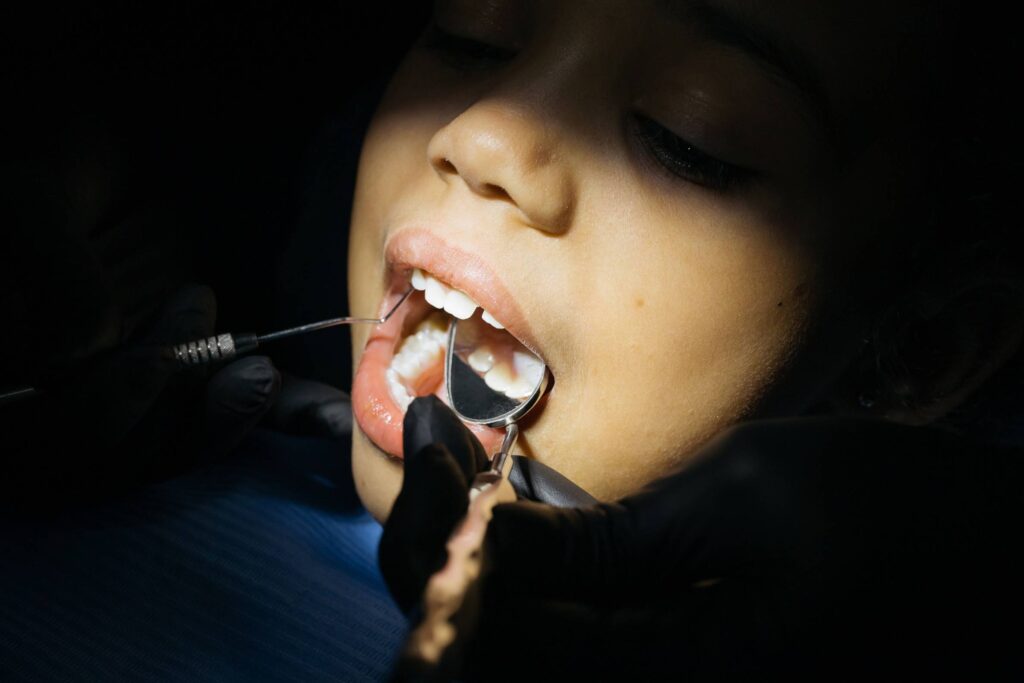
Most children’s dental fear is manageable with the strategies above. But in some cases, anxiety is severe enough to prevent any dental care from happening. Signs that your child may need additional support include:
• Physical symptoms like vomiting, shaking, or hyperventilating before or during the visit
• Complete refusal to open their mouth despite multiple gentle attempts over multiple visits
• Dental phobia that extends to other medical settings (doctors, hospitals)
In these cases, your dentist may recommend conscious sedation — a safe, monitored form of sedation that helps the child relax enough to receive treatment without full general anaesthesia.
This is available at select dental clinics in Accra and can be discussed during your consultation.
Book Your Child’s First Visit at Akcess Dental
All three branches welcome children and families. Our team is experienced with anxious young patients.
North Legon (Bethel Street, Accra), Oyarifa Mall (Ayi Mensah, Accra), Ho-Bankoe (Beside NIB, Ho): +233 59 192 8740: phone.
First visits are gentle, pressure-free, and designed to build confidence, not fear.
Related Reading
→ Teeth Cleaning Cost in Ghana: What to Expect in 2026
→ Emergency Dentist in Accra: What to Do When You Have Tooth Pain