

Knowing how to prevent cavities is simple with the right daily habits. To keep your teeth strong and healthy, brush twice a day with fluoride toothpaste, floss daily to remove plaque from between your teeth, and limit sugary foods and drinks.
Regular dental check-ups and professional cleanings are also essential for catching any potential issues early and maintaining optimal oral health.
But how do cavities come about, and how can we practically avoid them?
How Cavities Form: The Tooth Decay Process
Cavities, also known as tooth decay or dental caries, are permanently damaged areas in the hard surface of your teeth that develop into tiny openings or holes. This process occurs over time and is influenced by your diet, oral hygiene habits, and the presence of bacteria in your mouth.
Here’s a step-by-step breakdown of how cavities form:
- Plaque Formation: Your mouth is naturally full of bacteria. When you consume sugary or starchy foods and drinks, these bacteria feed on the sugars, creating a sticky, colorless film called plaque that coats your teeth.
- Acid Attack: The bacteria in plaque produce acids that eat away at the minerals in your tooth’s hard, outer enamel. This process is called demineralization. The more sugar you consume, the more acid is produced, leading to a higher risk of tooth decay.
- Enamel Erosion: Over time, the repeated acid attacks cause the enamel to lose minerals. You might notice a white spot on your tooth, which is an early sign of demineralization. At this stage, the decay process can often be reversed with proper care.
- Cavity Formation: If the demineralization process continues, the enamel will weaken and break down, forming a cavity. Once a cavity forms, the damage is permanent and requires professional dental treatment to repair.
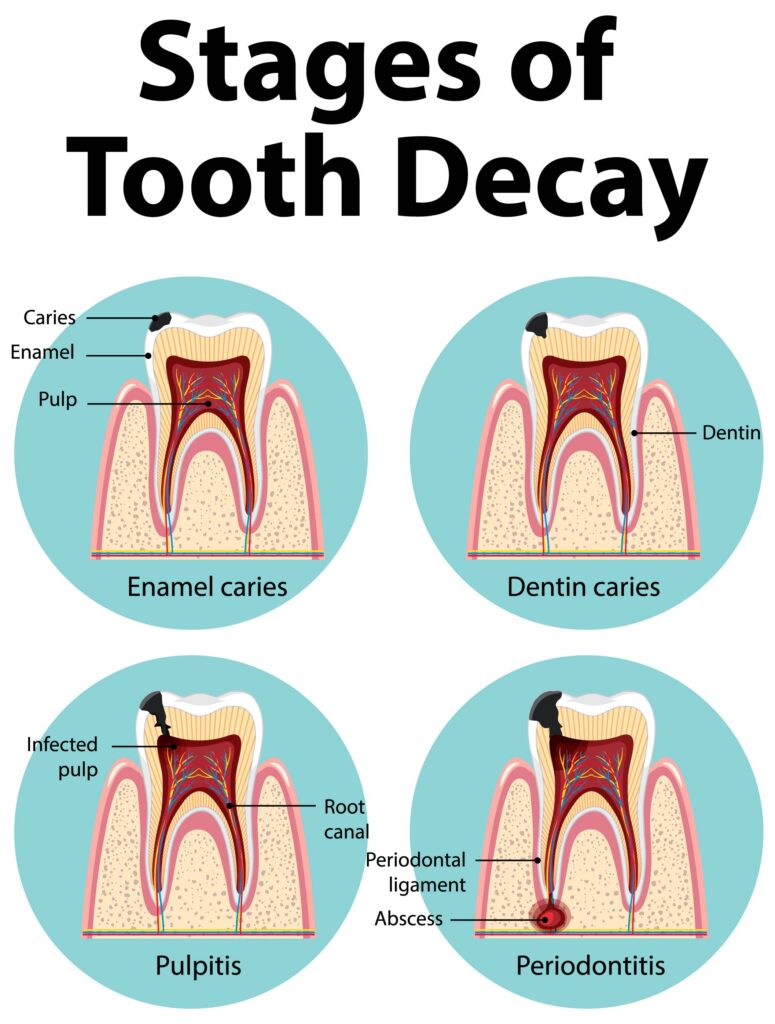
Image alt text: A diagram illustrating the progression of tooth decay, from a white spot on the enamel to a cavity reaching the dentin and pulp of the tooth.
Understanding this process is the first step toward preventing cavities. By disrupting the formation of plaque and limiting the acid attacks on your teeth, you can protect your enamel and maintain a healthy, cavity-free smile.
Daily Habits That Prevent Cavities
Consistent daily habits are the foundation of a cavity-prevention strategy. By incorporating these simple practices into your routine, you can significantly reduce your risk of tooth decay and maintain strong, healthy teeth.
Proper Brushing Techniques
Brushing your teeth is the most effective way to remove plaque and food particles from the surfaces of your teeth. However, how you brush is just as important as how often you brush.
Here are some tips for proper brushing technique:
- Brush Twice a Day: The American Dental Association (ADA) recommends brushing your teeth for two minutes, twice a day. Brushing in the morning helps to freshen your breath and remove plaque that has built up overnight. Brushing before bed is crucial for removing food particles and plaque that have accumulated throughout the day.
- Use a Soft-Bristled Toothbrush: A soft-bristled toothbrush is gentle on your gums and enamel, while still effectively removing plaque. Hard-bristled brushes can be too abrasive and may damage your gums and tooth enamel over time.
- Use Fluoride Toothpaste: Fluoride is a natural mineral that strengthens tooth enamel and makes it more resistant to acid attacks. Always use a toothpaste that contains fluoride to give your teeth the best protection against cavities.
- Perfect Your Technique: Angle your toothbrush at 45 degrees to your gum line and use gentle, circular motions to clean the front, back, and chewing surfaces of all your teeth. Don’t forget to brush your tongue to remove bacteria and freshen your breath.

Image alt text: A person brushing their teeth using the proper 45-degree angle to effectively clean the gum line and tooth surfaces.
Flossing Tips for Better Oral Health
Flossing is essential for removing plaque and food particles from between your teeth and under the gum line, where your toothbrush can’t reach. If you’re not flossing, you’re missing about 40% of your tooth surfaces.
Here’s how to floss effectively:
- Use Enough Floss: Start with about 18 inches of floss. Wrap most of it around one of your middle fingers and a small amount around the middle finger of your other hand.
- Be Gentle: Gently guide the floss between your teeth using a rubbing motion. Never snap the floss into your gums, as this can cause irritation and bleeding.
- Form a “C” Shape: When the floss reaches your gum line, curve it into a “C” shape against one tooth. Gently slide it into the space between your gum and tooth.
- Clean Both Sides: Rub the side of the tooth with gentle up-and-down motions. Repeat this process for the adjacent tooth before moving to the next set of teeth.
If you find traditional floss difficult to use, consider using a water flosser or interdental brushes. The most important thing is to clean between your teeth every day.
Professional Preventive Treatments
In addition to your daily oral hygiene routine, professional preventive treatments at your dentist’s office can provide an extra layer of protection against cavities. At Akcess Dental, we offer several preventive services to help our patients in Ghana maintain optimal oral health.
Fluoride Treatments
Professional fluoride treatments contain a much higher concentration of fluoride than what is found in toothpaste and mouthwash. This treatment is a quick and painless way to strengthen your tooth enamel and help reverse the early signs of tooth decay.
Fluoride works by restoring minerals to your tooth enamel (remineralization) and making your teeth more resistant to future acid attacks. We may recommend fluoride treatments during your regular dental check-ups, especially if you have a history of cavities or are at a higher risk for tooth decay.
Dental Sealants
Dental sealants are a thin, protective coating that is painted onto the chewing surfaces of your back teeth (molars and premolars). These teeth have deep grooves and pits that can be difficult to clean with a toothbrush, making them a prime spot for plaque and bacteria to accumulate.
Sealants act as a barrier, “sealing out” food and plaque and preventing cavities from forming in these vulnerable areas. The application process is quick, easy, and painless.
Sealants are a highly effective preventive measure, especially for children and teenagers, but they can also be beneficial for adults who are prone to cavities.

Image alt text: A dentist applying a dental sealant to the chewing surface of a molar to protect it from tooth decay.
To learn more about how these treatments can benefit you and your family, we encourage you to schedule a consultation for preventive dental care at Akcess Dental.
Diet and Lifestyle Habits That Protect Teeth
Your diet and lifestyle choices play a significant role in your oral health. By making a few simple adjustments, you can create a tooth-friendly environment in your mouth and reduce your risk of cavities.
- Limit Sugary and Acidic Foods: Sugar is the main culprit when it comes to tooth decay. Limit your intake of sugary snacks, candies, and sodas. Acidic foods and drinks, such as citrus fruits and sports drinks, can also erode your tooth enamel.
- Eat a Balanced Diet: A diet rich in fruits, vegetables, lean proteins, and dairy products provides the essential nutrients your teeth and gums need to stay healthy. Foods high in calcium, such as milk and cheese, can help to strengthen your enamel.
- Drink Plenty of Water: Water helps to rinse away food particles and bacteria from your mouth. It also promotes saliva production, which is your body’s natural defense against tooth decay.
- Avoid Frequent Snacking: Every time you eat, you expose your teeth to an acid attack. If you snack frequently throughout the day, your teeth are under constant assault. Try to limit snacking between meals to give your saliva a chance to neutralize the acids in your mouth.
Frequently Asked Questions (FAQ)
1. What is the main cause of cavities?
The main cause of cavities is tooth decay, which results from the breakdown of tooth enamel by acids produced by bacteria in your mouth. These bacteria feed on sugars from the foods and drinks you consume, creating plaque and leading to demineralization.
2. How can I prevent cavities naturally?
You can prevent cavities naturally by practicing good oral hygiene, including brushing twice a day with fluoride toothpaste and flossing daily. Eating a balanced diet that is low in sugar and high in calcium, and drinking plenty of water, also helps to protect your teeth.
3. How often should I brush and floss?
The ADA recommends brushing your teeth for two minutes, twice a day, and flossing at least once a day to remove plaque and food particles from between your teeth and under your gum line.
4. Do fluoride treatments really prevent cavities?
Yes, fluoride treatments are a highly effective way to prevent cavities. Fluoride strengthens tooth enamel, making it more resistant to acid attacks, and can even help to reverse the early stages of tooth decay.
5. Are dental sealants effective for preventing cavities?
Dental sealants are very effective at preventing cavities, especially on the chewing surfaces of your back teeth. They create a protective barrier that seals out food and plaque, reducing the risk of decay in these vulnerable areas.
Protect Your Smile with Preventive Care at Akcess Dental
Preventing cavities is a team effort between you and your dental care provider. By adopting these practical daily habits and seeking professional preventive care, you can protect your teeth from decay and enjoy a lifetime of healthy smiles.
If you’re in Ghana and looking for a trusted partner in your oral health journey, we invite you to experience the compassionate and comprehensive care at Akcess Dental.
Schedule your dental check-up and cleaning today and let us help you achieve and maintain a beautiful, cavity-free smile.