
The Stages of periodontal Disease
periodontal disease is an infection of the tissues that support your teeth. It is one of the most common dental health issues worldwide, yet because it often develops quietly and painlessly in its early stages, many people do not realize they have it until significant damage has occurred.
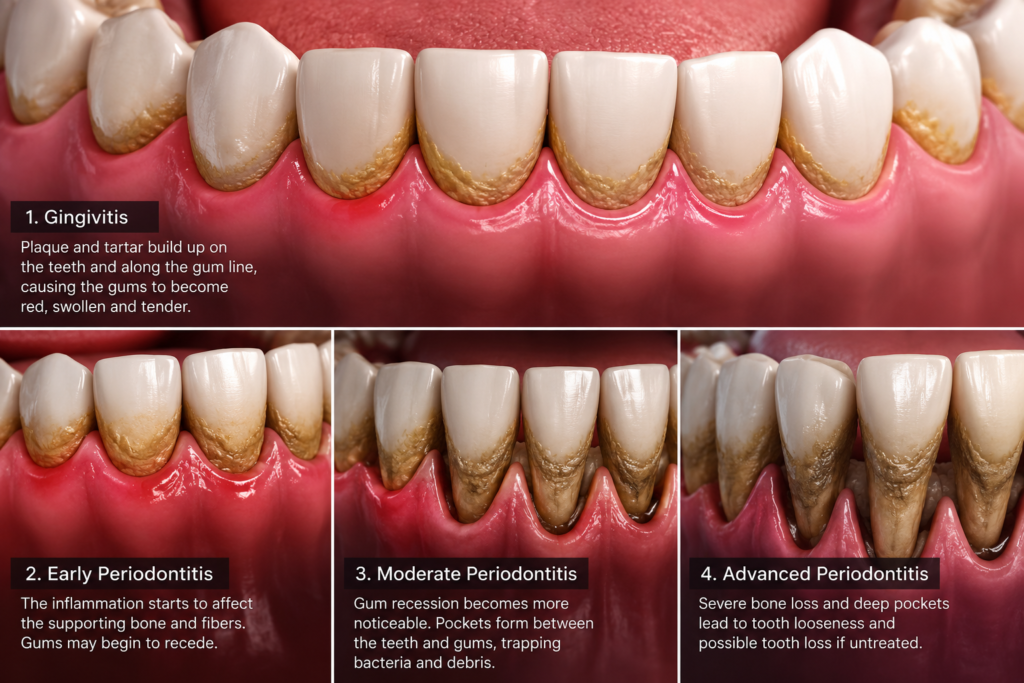
Periodontal disease typically progresses through two main stages:
1. Gingivitis (Early Stage)
What it is: Mild inflammation of the gums caused by plaque buildup along the gumline.
Symptoms: Redness, swelling, tenderness, and bleeding during brushing or flossing.
Reversibility: Fully reversible with proper oral hygiene and a professional dental cleaning, as the bone supporting the teeth has not yet been affected.
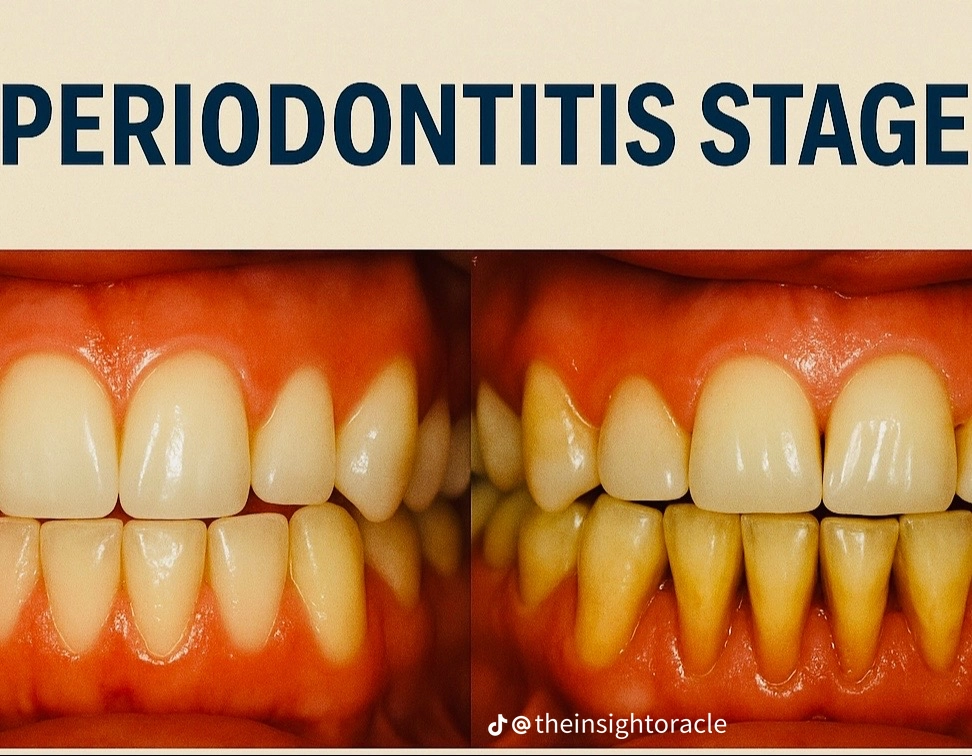
2. Periodontitis (Advanced Stage)What it is: Left untreated, gingivitis can progress to periodontitis. The inner layer of the gum and bone pull away from the teeth, forming deep pockets that collect bacteria.
Symptoms: Receding gums, persistent bad breath (halitosis), pus along the gumline, loose teeth, and changes in how your teeth fit together when biting.
Reversibility: Irreversible, but controllable. Bone and tissue damage cannot easily be undone, but medical treatment can prevent further damage.
Major Risk Factors: While plaque buildup is the primary cause, several factors increase the likelihood of developing periodontal disease:
Poor Oral Hygiene: Infrequent brushing or flossing allows plaque to harden into tartar (calculus).
Smoking & Tobacco Use: Tobacco significantly impairs tissue healing and worsens gum damage.
Hormonal Changes: Pregnancy, puberty, and menopause make gums more sensitive and prone to inflammation.
Diabetes: High blood sugar levels increase the risk and severity of infections, including gum disease.
Genetics:A family history of periodontal disease can increase susceptibility.Common Signs to Watch For.
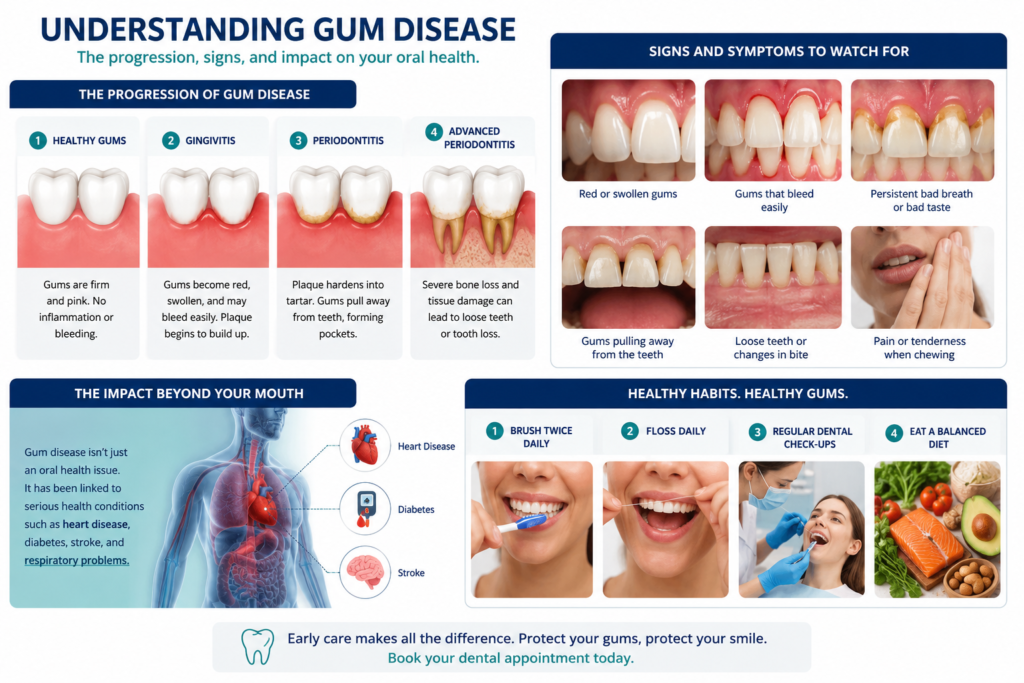
If you notice any of the following symptoms, schedule a visit with your dentist:
Bleeding gums while brushing, flossing, or eating hard food.
Persistent bad breath or a bad taste that won’t go away.
Gums pulling away from teeth, making teeth look longer. Pus around teeth and gums.
Changes in bite or how partial dentures fit.
How to Prevent periodontal Disease
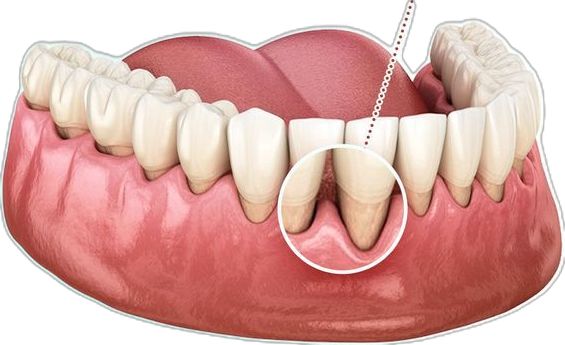
Prevention is simple and relies on maintaining daily habits:
Brush Twice Daily: Use a soft-bristled toothbrush and fluoride toothpaste for two minutes twice a day.
Floss Daily: Clean between teeth where toothbrush bristles cannot reach to remove trapped food and plaque.
Use an Antiseptic Mouthwash: Helps reduce plaque bacteria in hard-to-reach areas.
Visit Your Dentist Regularly: Professional cleanings every 6 months remove hardened tartar that regular brushing cannot.
Avoid Tobacco: Quitting smoking or chewing tobacco drastically improves gum health.
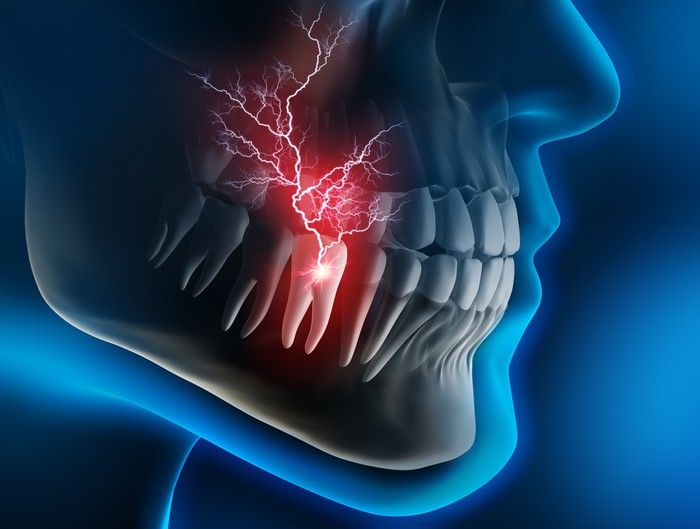
DENTAL TREATMENT OPTION
Depending on the severity of the condition, your dentist or periodontist may recommend:
Professional Dental Cleaning: Removes plaque and tartar from above and slightly below the gumline.
Scaling and Root Planing: A deep-cleaning procedure that scrapes off tartar and smooths root surfaces to prevent future bacteria accumulation.
Surgical Options: In advanced cases, treatments like pocket reduction surgery or bone/tissue grafts may be required to restore structural support.